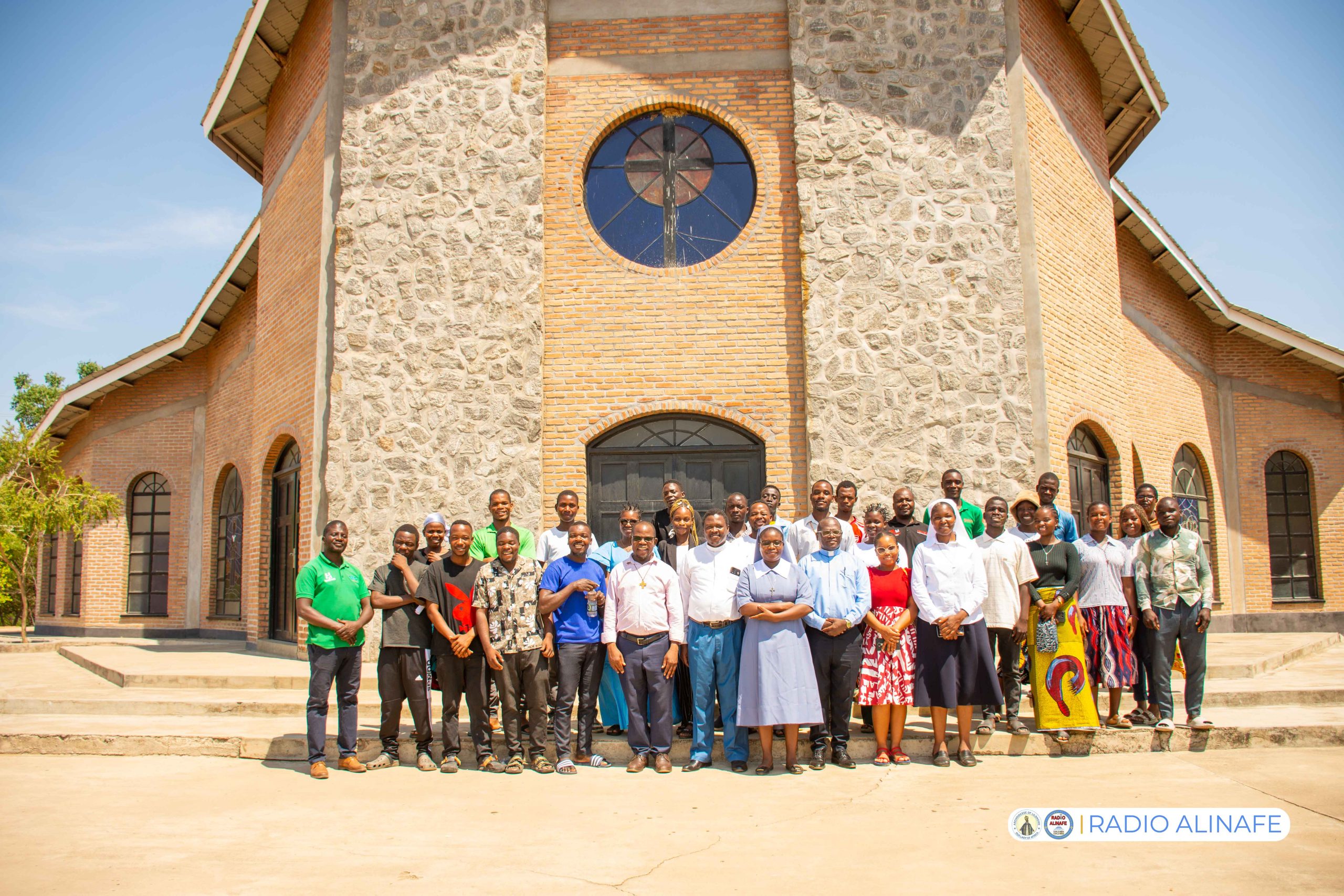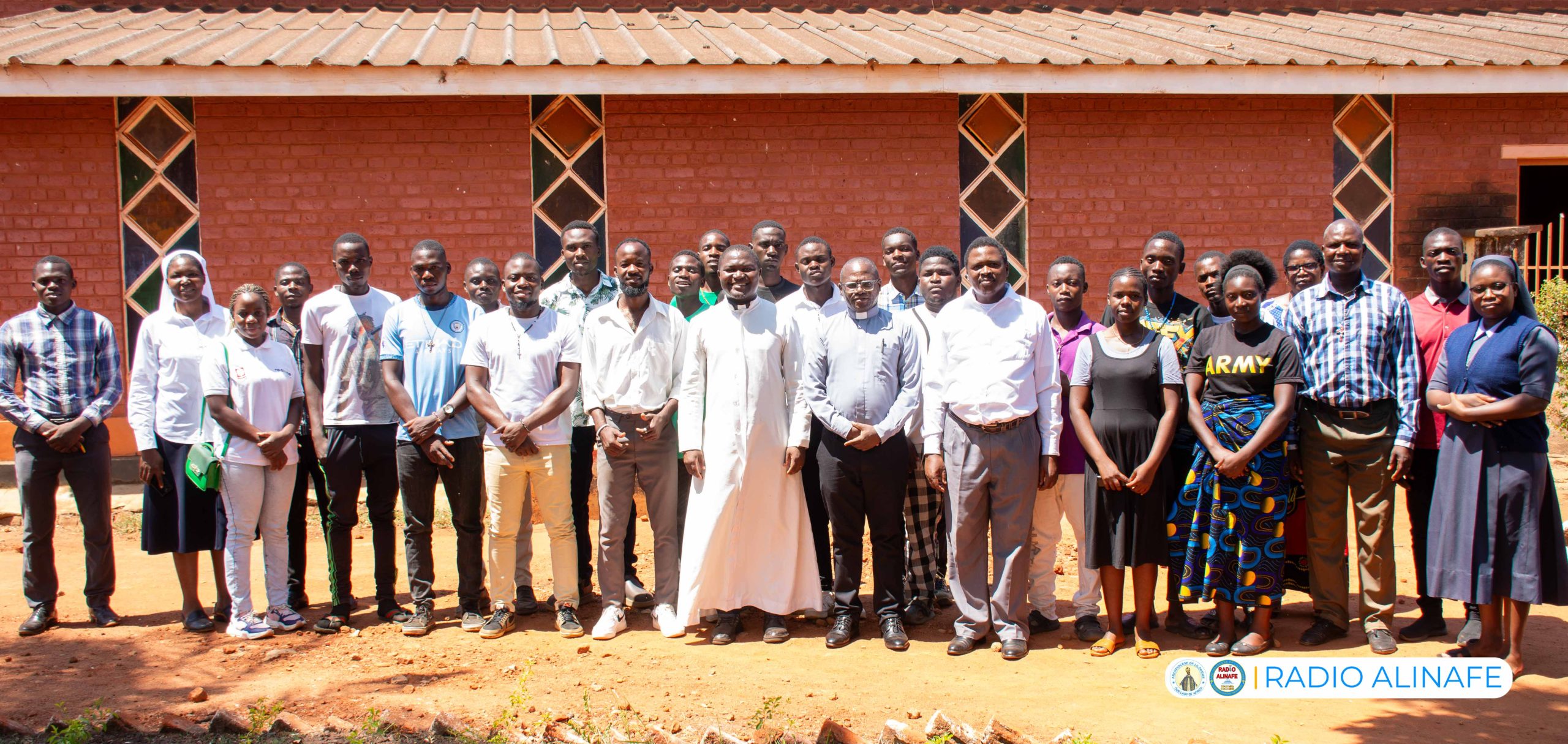
The Catholic Archdiocese of Lilongwe has called on youth in the Salima Deanery to take the lead in environmental conservation, community development, and caring for creation during a two-day training at Mary Mother of Church Parish in Benga.
Organised by the Archdiocese’s Pastoral Department under the Promotion of Laudato Si’ Among the Youth project with funding from Missio Aachen, the workshop equips young leaders with practical skills in environmental protection, tree planting and management, Children and Vulnerable Adults safeguarding policy, entrepreneurship, and financial management.

Archdiocesan pastoral coordinator, Rev. Fr. Francis Lekaleka said the training is designed to move young people beyond classroom theory into tangible, community-level action.
Pointing to Benga’s lush, cool surroundings as a practical model compared to barren areas stripped of vegetation where charcoal selling is widespread along roadsides, Fr. Lekaleka noted that many young people come from communities affected by or involved in environmental degradation.

“We want them to put whatever they have learnt into practice. We want action,” Fr. Lekaleka said, adding that many workshops fail when they end in mere theory.
Encouraged by the youths’ active participation in discussions and the presence of the deanery chaplain, he announced that his office will conduct follow-up visits to parishes about a month after the training to assess how participants are implementing their skills.

Fr. Lekaleka further emphasized that the initiative aligns with the vision of the Archbishop, Most Rev. George Desmond Tambala, and his auxiliary, Rt. Rev. Vincent Fredrick Mwakhwawa, to tackle poverty in Malawi by keeping young people productively engaged so they can earn a living rather than sitting idle.
Expressing gratitude to German donors Missio Aachen for their continued support, he noted that holding the training in Benga demonstrates the Archdiocese’s commitment to taking development beyond administrative offices directly to remote communities.

One of the facilitators, Rev. Fr. Frank Phiri challenged the participants to take the project seriously, implement what they discuss, and become agents of change so future generations inherit a good climate and a healthy earth.
Rooted in the late Pope Francis’s Laudato Si’, the initiative calls on young Catholics to address the human roots of the ecological crisis through a “change of lifestyle,” mindset, and attitude.

“They shouldn’t be afraid to talk to chiefs, to talk to politicians, to talk to church leaders that this issue is a real issue,” Fr. Phiri said.

Echoing the call for practical action, Lombani Chilambo, a facilitator from the Catholic Development Commission (CADECOM), emphasized that youth involvement must go beyond planting trees to actively managing them.

She noted that while young people are already familiar with tree-planting exercises, post-planting care remains a major gap.

Chilambo encouraged youths to establish tree nurseries to improve seedling survival rates before planting them in parishes, deaneries, and surrounding communities, a step that strengthens climate resilience while supporting local livelihoods.
In response to the coming in of the trainings, Salima Deanery Youth Chaplain, Rev. Fr. Macarius Mpundu, SDB, said the Archdiocesan programme strengthens youth unity and fosters responsibility toward caring for the common home.

“If we don’t take measures today, we are suffering today and we are not responsible enough for the generation that is yet to come,” Fr. Mpundu said, stressing that caring for God’s creation must begin with young people.
He committed to immediate post-training action by planting trees on idle, encroached church land, starting around Mtawila and extending to other parish areas of Nkhotakota.
On safeguarding children and vulnerable adults, facilitator Mrs. Chrissy Mithi urged participants to return to their parishes and train fellow youths on protection measures, noting that young people themselves can be victims and should report any cases to their parish priest.


In addition, Salima deanery youth chairperson, Japhet Nkunika noted efforts to engage relevant officials to equip youths with the skills needed to restore the environment.
Sr. Mary Lupenga, who led sessions on entrepreneurship and financial management, urged the youth to embrace self-reliance by starting small businesses rather than waiting for formal employment, which she noted is increasingly difficult to find in Malawi.
“So, we can say now in Malawi for them to get jobs is very difficult. So that’s why we came up with this idea of teaching them on how to rely on themselves in terms of businesses,” Sr. Lupenga said.

She added that financial management skills will help participants properly handle money from small or growing ventures, pointing to tree-growing and orchards as practical business opportunities.
“After cultivating, they can turn it into timber, or they can turn it into something else. At the end they’ll get something—something financial.”


Lloyd Chishambula finished the training with a session focusing on leadership.
He taught and encouraged the youths to embrace servant leadership, be exemplarily and play their role as they lead their group.

There were some other activities which the youths were given to show the importance of relying on one another.
The training started on Thursday, 26th November 2026 to 27th November 2026.