The government of Malawi says it has intensified efforts aimed at raising awareness about Polio Vaccination and sustain progress towards eradicating the disease.
The interventions follow the detection of a polio virus case in the country earlier this year, which prompted authorities to renew vaccination campaigns and strengthen the surveillance of the disease to prevent further transmission.
Speaking as part of the commemoration of World Polio Day, Rotary International PolioPlus Chair for Malawi, Irshaad Mahomed, said limited awareness, especially in rural communities, remains a major challenge in the fight against polio.
Mahomed said Rotary International, in partnership with the Ministry of Health and Sanitation, the World Health Organisation (WHO) and UNICEF, are stepping up awareness campaigns to encourage parents and guardians to have their children vaccinated.

He said the initiative includes radio and television programmes and the distribution of posters to reach communities that have limited access to information about the importance of polio vaccination.
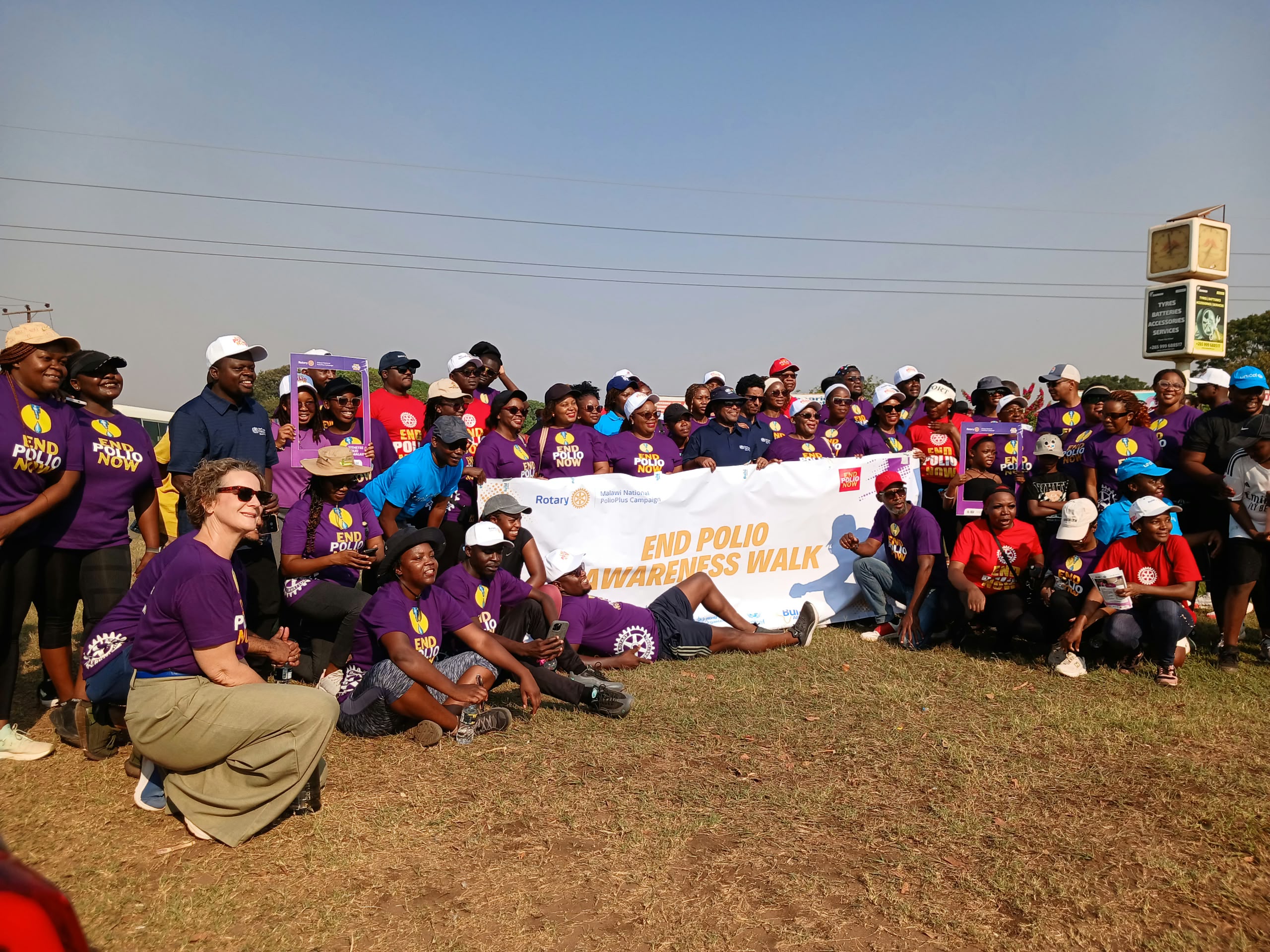
Mahomed made the remarks during a Polio Sensitisation Big Walk in Lilongwe, held as part of Rotary’s annual global campaign to mobilise communities in the fight against polio.
He said Rotary has been supporting global polio eradication efforts since 1985, contributing about 2.9 billion US dollars towards the cause and helping vaccinate children across the world.
Director responsible for Public Health Emergencies in the Ministry of Health and Sanitation, Dr Annie Chauma Mwale, said the government remains committed to eradicating polio through routine immunisation, supplementary vaccination campaigns and strengthened surveillance systems.

Mwale said the government is continuing with the provision of the routine polio immunisation through health facilities, while supplementary campaigns are conducted whenever cases are detected to contain possible transmission.
According to Mwale, the country has so far completed four rounds of supplementary vaccination campaigns following the detection of a polio-virus case earlier this year.
She added that environmental surveillance, which involves testing wastewater for the presence of poliovirus, is also helping health authorities monitor the possible circulation of the virus in communities.
Meanwhile, the World Health Organisation has called on journalists and other influential voices to help address misconceptions about polio vaccines that may discourage parents from having their children immunised.
WHO global polio eradication initiative coordinator in Malawi, Samuel Kondwani, said the oral polio vaccine is safe and effective, urging the media to provide accurate information to counter fears about possible side effects.

Samuel said some parents remain hesitant because of concerns about the vaccine, making public education essential to ensure that more children are protected.
He highlighted the importance of community immunity, explaining that when a large proportion of children are vaccinated, the spread of the virus is reduced, which helps to protect even those who may have missed vaccination.
By Lester Mhone.