
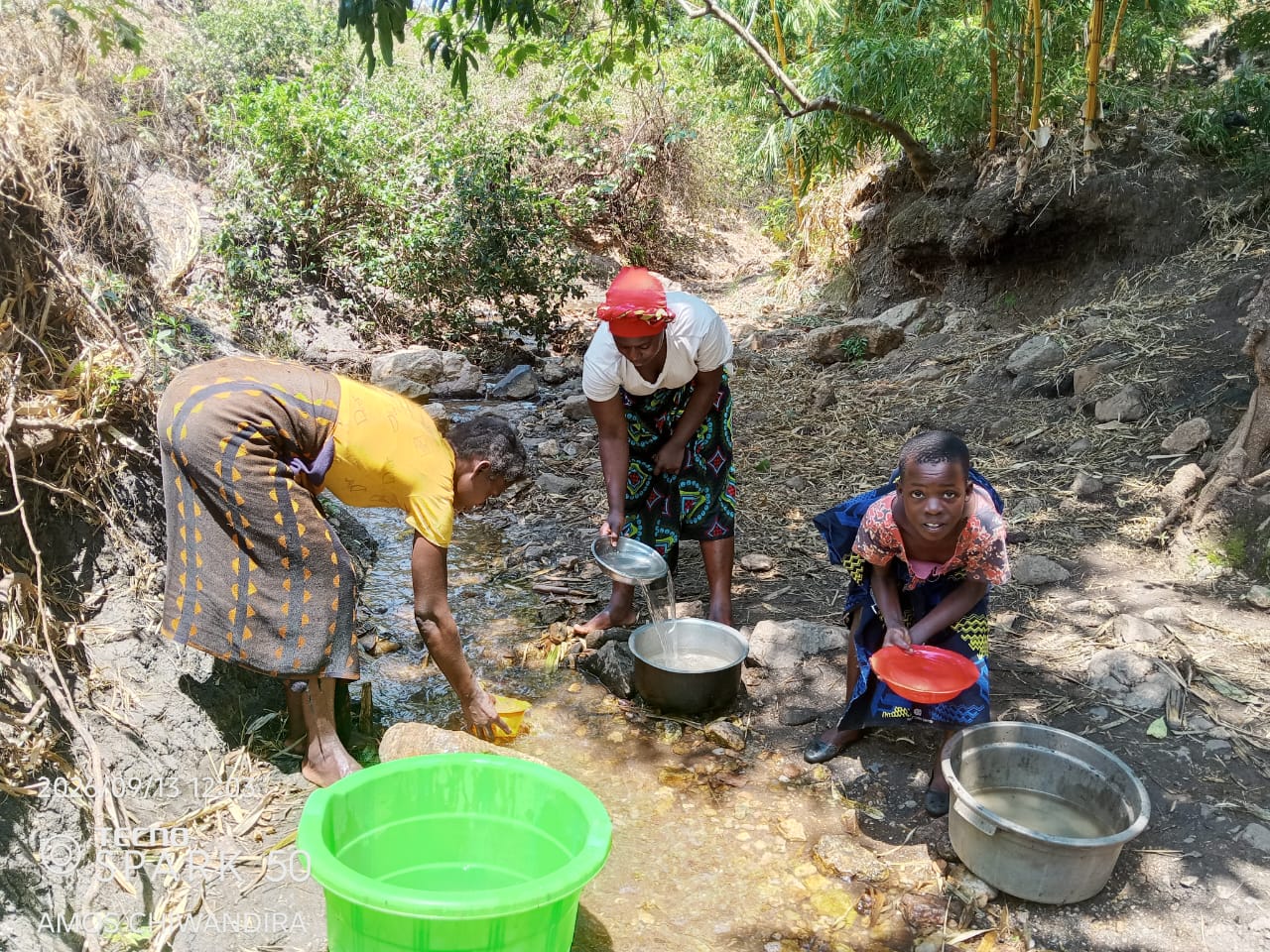
At Kapotera Primary School in Dowa District, the absence of a reliable water supply is more than an inconvenience. For adolescent girls, it means missed lessons, difficulties managing menstruation and a daily struggle to protect their dignity.
For many girls, menstruation is a natural part of growing up. But for Memory Lingisoni, a Standard 7 learner at Kapotera Primary School in Dowa District, it sometimes comes with an additional burden: missing classes because her school has no reliable water supply.
While other learners concentrate on their lessons, Memory sometimes faces a difficult choice between remaining at school without adequate water to manage her menstrual hygiene and missing classes altogether.
For her, the absence of water is not just a sanitation problem. It is a barrier to education, personal hygiene and dignity.
“Sometimes I miss classes when I am menstruating because there is no water at school. It becomes difficult for me to manage my personal hygiene, and this affects my learning,” Memory said.

Her experience reflects the challenges facing learners at Kapotera Primary School, located in the area of Group Village Head Mkuziwaduka, Traditional Authority Mponela, in Dowa District.
At an age when education is essential for shaping her future, Memory is already experiencing how inadequate access to water can interfere with her learning.
Every lesson missed represents lost learning time, while the absence of adequate water for menstrual hygiene management creates additional challenges for girls trying to remain in school.
For adolescent girls, access to clean water is particularly important during menstruation. Without it, maintaining personal hygiene becomes difficult, potentially affecting their confidence, comfort and participation in school activities.
Memory’s situation highlights a wider concern about menstrual health and hygiene in rural schools, where inadequate water, sanitation and hygiene (WASH) services can undermine efforts to promote girls’ education.
The water crisis at Kapotera Primary School is not new.
According to the school’s headteacher, Frackson Kanyonyomala, the institution has struggled with inadequate water access since it opened.
Kanyonyomala says the situation continues to affect both learners and teachers, making it difficult for the school to operate effectively.
He explains that the school relies on water collected from distant sources and stored in buckets. However, the amount collected is often insufficient to meet its daily needs.
“We collect water from distant places and store it in buckets, but the water is not enough to meet the needs of the school. This has greatly affected teaching and learning activities,” Kanyonyomala says.
The headteacher explains that the shortage affects the school’s daily operations, placing additional pressure on learners and teachers who must carry out their responsibilities without adequate water.

He says the situation has also made it difficult for teachers to settle comfortably at the school.
“The water problem has been here since the school was opened. It affects both learners and teachers, and some teachers find it difficult to settle at the school because of the situation,” he explained.
For Kanyonyomala, the continued absence of a reliable water supply is a serious concern requiring urgent intervention.
He says the school has repeatedly sought assistance and was previously promised that efforts would be made to connect it to piped water.
According to the headteacher, the government had also indicated that it would identify organisations that could help address the problem.
However, the school is still waiting for a lasting solution.
“We are appealing to the government to fulfil its promise of providing piped water to the school. We believe this would help address the challenges we have been facing for many years,” he says.
Group Village Head Mkuziwaduka says the shortage of safe water has become a serious challenge for surrounding communities, affecting education and everyday life.
The traditional leader describes the situation as worrying, saying the persistent water problem has created numerous difficulties for learners, teachers and residents.
“The shortage of water is seriously affecting teaching and learning at the school. It is worrying that this problem has continued for such a long time without a solution,” Mkuziwaduka says.
According to the traditional leader, community members have repeatedly appealed to relevant authorities to provide a reliable water supply, but their efforts have not produced the desired results.
Mkuziwaduka says the situation is particularly concerning because people living around the school depend on water from a well that the community considers unhygienic and unsafe for drinking.
“People in the surrounding communities rely on water from a well that is not hygienic. We have been asking the authorities to help us access safe water, but nothing has been done so far,” the traditional leader explains.
The situation raises concerns about the health and well-being of residents, particularly children, who may be exposed to waterborne diseases when safe drinking water is unavailable.
Unsafe water and inadequate sanitation are associated with preventable illnesses, including diarrhea, which can further affect children’s health and school attendance.
For Mkuziwaduka, providing safe water would not only improve conditions at Kapotera Primary School but also help protect the health and dignity of families in surrounding communities.

Although the water shortage affects the entire school, its consequences can be particularly challenging for adolescent girls.
Menstrual hygiene management requires access to water, appropriate sanitation facilities, privacy and suitable materials.
Without these basic necessities, girls may struggle to manage menstruation comfortably and confidently while attending classes.
Memory’s experience illustrates how inadequate WASH services can contribute to educational inequality.
While boys and girls are both affected by water shortages, adolescent girls face additional challenges associated with menstruation.
For Memory, missing classes during her menstrual period means losing valuable learning time.
Over time, repeated absences can make it more difficult for affected learners to keep up with their studies.
The problem also raises questions about whether rural schools are adequately equipped to provide a safe, inclusive and supportive learning environment for every child.
Access to water should not determine whether a girl attends school, yet Memory’s experience demonstrates how the absence of this basic service can become an obstacle to education.
As learners and surrounding communities continue struggling to access safe water, the Member of Parliament for the area, Annie Chibwana, has acknowledged the persistent water shortage affecting Kapotera Primary School and nearby communities.
Chibwana says she is aware of the challenges and that efforts are underway to identify a lasting solution.
According to the legislator, authorities have approached a Muslim organization for assistance in addressing the water problem.
She explains that accessing underground water in the area has proved difficult, making the drilling of boreholes an unreliable option.

Chibwana says the organization has expressed willingness to assist with the installation of piped water, which would serve both the school and surrounding communities.
The legislator believes that the proposed project could provide a sustainable solution to a problem that has affected the area for years.
She expresses hope that the intervention will improve access to safe water, ease the burden on learners and teachers, and improve living conditions for surrounding communities.
However, the proposed project has yet to materialize, leaving learners and residents continuing to depend on inadequate water sources.
While the anticipated assistance offers hope, questions remain about when the project will begin, how it will be implemented and how soon the school and surrounding communities will have access to reliable water.
For Memory and other learners, the proposed intervention represents more than an infrastructure project. It offers the possibility of attending school without the daily challenges associated with water scarcity.
The challenges facing Kapotera Primary School highlight the close relationship between water, sanitation, health and education.
Access to safe water is essential for drinking, handwashing, sanitation and menstrual hygiene management.
It is also important for creating an environment where learners can concentrate on their education without worrying about meeting basic hygiene needs.
For the school administration and surrounding communities, the solution lies in providing a sustainable and reliable water supply.
Kanyonyomala believes that connecting the school to piped water would significantly improve teaching and learning conditions.
Meanwhile, Group Village Head Mkuziwaduka continues to appeal for urgent action, saying the community has waited too long for a solution.
Their concerns highlight the need for stronger collaboration among government authorities, development partners and local communities to improve WASH services in rural schools.
Beyond providing water, such interventions would help ensure that girls have the opportunity to manage menstruation safely and with dignity while continuing their education.
The proposed piped-water project could be an important step towards addressing these challenges, but its success will depend on whether the promised assistance translates into a functioning and sustainable water supply.
For Memory, the water crisis is not simply about infrastructure, government promises or development plans.
It is about the lessons she misses, the discomfort she experiences during menstruation and the challenges she faces while pursuing her education.
For her teachers, it is about trying to provide quality education in an environment where one of the most basic necessities remains unavailable.
For the surrounding community, it is about the continuing struggle to access safe water despite repeated appeals for assistance.
Although the Member of Parliament has expressed hope that assistance is forthcoming, uncertainty surrounding the proposed project’s implementation means that the school and community must continue coping with the consequences of inadequate water access.
The situation at Kapotera Primary School raises an important question: How many more lessons must girls miss before access to safe water becomes a priority?
For Memory, a reliable water supply would mean more than having water available at school.
It would mean the freedom to attend classes during menstruation, learn without unnecessary interruptions and pursue her education with dignity.
And while efforts to secure assistance continue, Memory and other girls at Kapotera Primary School remain confronted by a challenge that should never stand between a child and her education.
For these girls, the promise of water offers hope. But until water actually flows at their school, that promise cannot restore the lessons they continue to miss.
By Monica Chinyama Lipiya