Categories
News

Teresian Sisters Empower Men and Women with Soap-Making Training to Combat Poverty and Gender-Based Violence

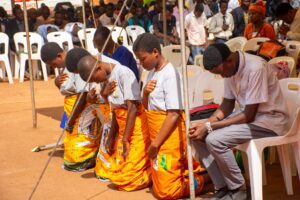
Residents of Sombe Village, Traditional Authority Khombeza in Salima district, have expressed their gratitude to the congregation of the Teresian Sisters in the Catholic Archdiocese of Lilongwe for their efforts in improving the lives of families in the area.

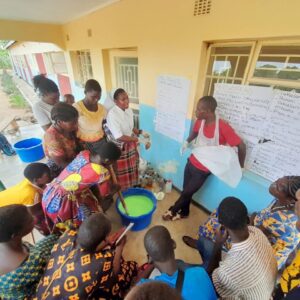
This appreciation was voiced when the sisters conducted training on how to make laundry and dishwashing soap, as a way to help families start small businesses and become economically self-reliant.

In her remarks, Sister Teresa Mulenga, who conducted the training, mentioned that they decided to provide this training to both men and women in the area as a way to help reduce domestic gender-based violence, which often stems from poverty.

“Last time, our main focus was to empower women. However, we realized that when we are talking about gender-based violence, it is not only women who need empowerment. Our program this time is focusing on empowering both men and women, and we have started here in Traditional Authority Khombeza to train them in dishwashing and laundry soap making.”

Sylvia Zimpita, a resident of the area, thanked the sisters for the training, stating that it would significantly help families improve their economic status.

“The training that we have been offered by the Teresian Sisters will really help us in our families, as now we will be able to start our small businesses based on the soap-making process we have been trained in.”

One of the male participants, Micheal Micheck, also applauded the Teresian Sisters for involving men in the training, saying that it will help many men in the area improve their households and become financially efficient through the soap-making business.

In addition to providing various skills training, the Teresian Sisters in the Archdiocese of Lilongwe are also involved in other activities, such as promoting gender-based violence prevention and educating women on caregiving and environmental conservation.


By Titus Jata Phiri

Categories
News

CADECOM Distributes Relief Aid to People Affected by Hunger in Nkhotakota

The Catholic Development Commission (CADECOM) in the Archdiocese of Lilongwe has today distributed cash and flour to people affected by hunger in Nkhotakota district.

Speaking during the distribution exercise at Traditional Authority Mwanzama in the district, CADECOM Acting Secretary in the Lilongwe Archdiocese, Madalitso Chilalire, said the exercise is part of responding to the call by the President of Malawi to assist people who have been affected by hunger in the country.

According to Chilalire, CADECOM decided to reach out to the people of Nkhotakota district, as it is one of the districts that has been affected by hunger due to prolonged dry spells and flooding, which have impacted many people in the area.

“Last year, we did not receive much rainfall due to El Niño, which resulted in low harvests across the country. Consequently, the President of Malawi appealed to the donor community for assistance, and the Episcopal Conference of Malawi, through CADECOM, appealed to Caritas International for support, which led to the fundraising of the money we are distributing today,” Chilalire explained.

CADECOM has also urged the beneficiaries to use the support they have received to address the problems their families are facing.

Parish Priest for Benga Parish, Father Steve Ochieng, who represented Archbishop George Tambala of the Lilongwe Archdiocese, said that as the Catholic Church, they will continue to help people facing numerous challenges in their daily lives.

“This is our commitment as the archdiocese. We will not leave them alone because we see their suffering, so we need to address those sufferings that people are experiencing in their areas,” Father Ochieng emphasized.

In his remarks, Traditional Authority Mwanzama applauded CADECOM for their gesture, saying that it has come at the right time, as many people in his area have been affected by hunger.

The beneficiaries from area of Lipenga ,Suluwi and Mwachipapa have received 100,000 Kwacha per household, and others have received a bag of porridge flour for those who have babies

CADECOM is conducting food crisis project with funding support from Caritas International Organization.

By Titus Jata Phiri.

Categories
News

WWO Commends Teresian Sisters for Empowering Malawian Women

The World Women’s Observatory (WWO) has praised the Congregation of Teresian Sisters in Malawi for their significant contributions to women’s empowerment through skills development.

During a visit to Lilongwe, WWO Office Director Adela Gonzalez, from Rome, Italy, expressed her organization’s appreciation. The visit aimed to acknowledge the diverse initiatives and activities the Teresian Sisters are implementing with women’s groups across all of Malawi’s dioceses.

Gonzalez highlighted the impact of the sisters’ work, emphasizing its role in fostering women’s self-reliance and promoting environmental conservation. “I can say that it is just amazing. I have been listening to the women, and the first thing I have seen is a passion for the work, a passion to help the community and their families. I have been traveling in Africa, and this is the first time I have seen women, together with sisters, preparing charcoal in a natural way without cutting trees,” Gonzalez stated.

Sister Teresa Mulenga, Programs Coordinator for the Congregation of Teresian Sisters, acknowledged the WWO’s visit as a source of motivation. “Our approach is holistic, and we are following the charism of the Teresian Sisters, where liberation is not just one-sided. We liberate people from different forms of slavery, including physical and spiritual aspects, and that’s what our founder has guided us to do,” Sister Mulenga explained, emphasizing the commitment to expanding training programs to liberate more women.

Martha Guga Kaukonde, a beneficiary from Limbe Cathedral in the Archdiocese of Blantyre, shared her personal experience, noting the positive impact on her family’s well-being. “My family status has improved through the various trainings and skills provided by the Teresian Sisters,” she said.

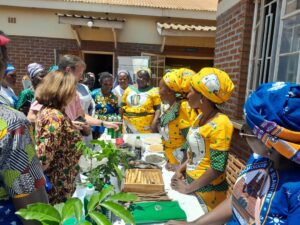
The Teresian Sisters provide practical skills training, including soap and petroleum jelly production, and environmentally friendly charcoal making from recycled materials like cartons and maize cobs, all aimed at enhancing the livelihoods of women and promoting environmental stewardship.

By Titus Jata Phiri

Categories
News

Ministry of Agriculture Applauds CAT’s Role in Agricultural Transformation

The Deputy Director of Agriculture Extension and Services in the Ministry of Agriculture, Kenneth Chaula, has applauded the Center for Agriculture Transformation (CAT) for its role in helping the country realize the Malawi 2063 vision on agricultural productivity and commercialization.

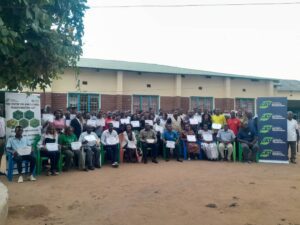
Chaula made this statement in Mponela, Dowa District, during a three-day Training of Trainers on Access to Agricultural Technologies, Finance, and Markets, organized by CAT for 80 field officers.

According to Chaula, the Ministry expects those trained in various skills related to Agricultural Technologies, Finance, and Markets to build the capacity of lead farmers in the field.

“Farmers should produce for the market, but first they must conduct market research to understand what buyers want. This skill has been gained during the training, and they will engage in collective production and collective marketing,” Chaula said.

CAT’s Director of Market Systems, Cuthbert Lunduka, mentioned that the training aimed to equip farmers with knowledge on accessing different technologies and markets to improve their productivity.

“For the last five years, we have been promoting diversification and the adoption of various improved technologies and innovations. We realized that this alone might not be sufficient to support farmers in adopting and commercializing different value chains, which is why we initiated this training to add more skills for them,” Lunduka explained.

One of the trainees, Esinta Ketulo from Msitu Mchinji EPA, described the training as an eye-opener, stating that it helped them learn various agricultural technologies that they will, in turn, teach to different farmers in their areas.

Twenty thousand farmers from five districts are expected to benefit from this training.

By Titus Jata Phiri